7 Best Windows and Sliding Glass Doors for Global Buyers
Choosing windows and sliding glass doors is no longer only a style decision. It affects comfort, energy use, security, and long-term maintenance. The U.S. Department of Energy reports that heat gain and heat loss through windows can account for 25% to 30% of residential heating and cooling energy use. That figure makes glass selection worth careful attention.
The wider building sector also matters. The International Energy Agency’s 2023 Global Status Report for Buildings and Construction states that buildings consume about 30% of global final energy. Better fenestration cannot solve that challenge alone. It can, however, reduce drafts, overheating, and unnecessary mechanical cooling when properly specified.
This guide examines seven strong options for global buyers. It considers low-E coatings, insulated glazing, U-values, solar heat gain coefficients, air leakage, drainage, and frame materials. These details become tangible in daily life: a handle that closes firmly, a track that stays smooth after rain, and glass that limits afternoon glare.
NFRC rating principles and regional certification practices provide useful benchmarks. Still, ratings are not universal passports. A product suited to a cold northern climate may perform poorly in a humid, high-sun location. Local wind loads, coastal corrosion, installation quality, and building codes must be checked before purchase.
No single door wins everywhere. That assumption is tempting, but incomplete. Some product descriptions also exaggerate “energy saving” claims without showing tested values. Readers should request verified performance data, warranty terms, replacement-part access, and installation guidance. The following selection offers practical comparisons, while leaving room for local engineering advice and careful buyer judgment.
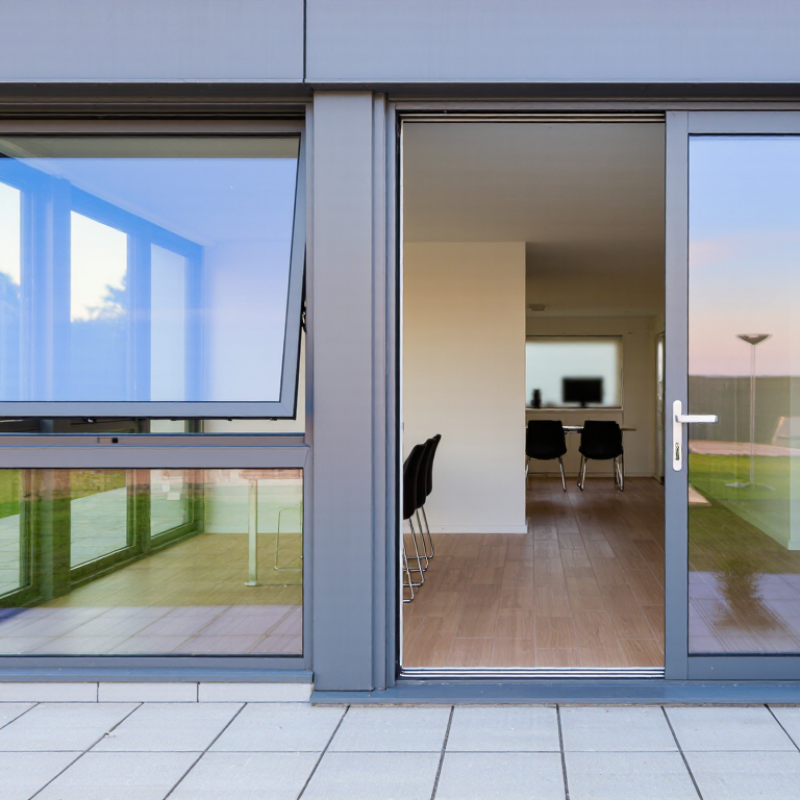
Global Criteria for Choosing Windows and Sliding Glass Doors
Global Criteria for Choosing Windows and Sliding Glass Doors
The seven strongest options include vinyl double-hung, fiberglass casement, thermally broken aluminum, timber-clad, uPVC tilt-and-turn, lift-and-slide, and multi-slide systems. Yet no window wins in every climate. The United Nations Environment Programme reported that buildings consumed 34% of global energy in 2022. It also linked the sector to 37% of energy-related emissions. Therefore, thermal performance deserves careful attention.
Compare U-values, solar heat gain coefficients, air leakage, visible transmittance, and condensation resistance. The U.S. Department of Energy estimates that windows can cause 25–30% of household heating and cooling energy use. In hot regions, low solar gain glass can reduce afternoon heat near large sliding doors. In cold regions, higher solar gain may support passive warmth. Orientation matters. So does shading.
I once treated a low U-value as a universal winner. It was not. A highly insulated window can still perform poorly with weak installation or uncontrolled moisture. Check tested results under recognized procedures, such as ISO 10077 calculations and independent certification schemes. For sliding doors, inspect roller durability, threshold drainage, gasket compression, and accessible repair parts. Coastal buyers should request corrosion testing, while hurricane-prone regions need locally approved impact and pressure ratings. Specifications can look impressive. Real performance depends on climate, wall design, workmanship, and maintenance.
7 Best Windows and Sliding Glass Doors for Global Buyers
Global Criteria for Choosing Windows and Sliding Glass Doors
| Option | Product Type | Typical Opening Configuration | Recommended Glazing | Typical Thermal Performance | Weather and Air-Sealing Performance | Best Climate or Application | Key Advantages | Important Limitations |
|---|---|---|---|---|---|---|---|---|
| 1 | Casement Window | Side-hinged sash opening outward with a crank or handle; commonly available as single, paired, or fixed-and-opening combinations. | Double insulating glass for moderate climates; low-emissivity double or triple glazing with argon or krypton gas for colder regions. | Common double-glazed units can achieve approximately U-factor 0.25–0.35 Btu/h·ft²·°F; high-performance triple glazing may reach about 0.15–0.25. | Usually provides strong air control because the sash presses against the compression seal when closed. Performance depends on frame, hardware, installation, and tested certification. | Cold, mixed, windy, and rainy climates; energy-efficient residential façades. | Excellent ventilation control, good daylight, strong compression sealing, and generally better air tightness than many sliding windows. | Requires exterior clearance; exposed hardware may need maintenance; outward opening can be unsuitable beside narrow walkways or balconies. |
| 2 | Awning Window | Top-hinged sash opening outward, usually operated with a crank or handle. | Low-e double glazing for general use; triple glazing for cold climates; laminated inner glass where improved sound reduction or safety is required. | Typical insulated configurations are approximately U-factor 0.25–0.38; verified high-performance systems can provide lower values. | Compression seals can provide good resistance to air leakage. The outward-opening top sash can help reduce direct rain entry while ventilating. | Wet climates, bathrooms, basements, low-level openings, and buildings requiring ventilation during light rain. | Allows ventilation during light rain, offers good sealing, and works well below fixed windows or in compact horizontal openings. | Limited maximum sash size; exterior projection can interfere with paths, shutters, or adjacent windows; wind should be considered before opening. |
| 3 | Double-Hung Window | Two vertically sliding sashes; both sashes may tilt inward for cleaning on many designs. | Double insulating glass is common; low-e coatings and warm-edge spacers improve thermal performance; triple glazing is available for colder regions. | Typical units range around U-factor 0.30–0.45, while certified high-performance versions may achieve approximately 0.20–0.30. | Weather performance varies widely by design. Interlocking meeting rails and continuous weather-stripping improve resistance to air and water infiltration. | Traditional and replacement projects, temperate climates, façades requiring vertical ventilation, and locations with limited exterior clearance. | Does not project outward, provides adjustable ventilation, and is often easier to install in tight exterior spaces. | Sliding seals may allow more air leakage than compression-sealed casement designs; tracks and balances require periodic cleaning and service. |
| 4 | Tilt-and-Turn Window | Multi-function hardware allows the sash to tilt inward at the top for ventilation or turn inward for full opening and cleaning. | Low-e double glazing for mild climates; triple glazing with insulated frames for cold climates and low-energy buildings. | Well-designed systems commonly target approximately U-factor 0.18–0.30, depending on frame material, glass, spacer, and installation. | Multiple locking points and compression gaskets can deliver strong air and water resistance when correctly manufactured and installed. | Cold climates, high-performance homes, upper floors, noise-sensitive areas, and projects prioritizing ventilation and security. | Combines secure ventilation, inward cleaning access, strong sealing, and flexible operation in one sash. | More complex hardware may increase cost and maintenance requirements; inward opening requires interior clearance for furniture and curtains. |
| 5 | Standard Sliding Patio Door | One or more movable panels slide horizontally on rollers beside a fixed panel; common configurations include two-panel and three-panel layouts. | Double insulating glass with low-e coating for general use; laminated or tempered safety glass is selected according to local safety rules and location. | Typical insulated patio doors may fall near U-factor 0.25–0.40; larger glass areas can increase total heat transfer even when center-glass performance is good. | Performance depends heavily on track drainage, interlocks, gaskets, roller adjustment, and sill design. Raised or drained sills are important in heavy-rain regions. | Balconies, patios, garden access, apartments, and projects requiring a space-saving exterior opening. | Does not require swing clearance, offers wide daylight openings, and is generally easy to operate when rollers are correctly adjusted. | Only part of the opening is usually clear at one time; tracks can collect dirt; roller and weather-seal maintenance is essential. |
| 6 | Lift-and-Slide Glass Door | Large panels are lifted slightly by the handle mechanism and then moved horizontally on heavy-duty rollers; panels close into compression seals. | Large-format double or triple insulating glass; low-e coatings, laminated glass, solar-control glass, and thermally improved spacers may be specified. | High-performance systems commonly target approximately U-factor 0.20–0.35, although large panel size and frame proportion affect whole-door results. | When closed, the panel can compress against perimeter gaskets for improved air and water control compared with basic sliding doors. Proper sill drainage is critical. | Luxury residences, large openings, mild-to-cold climates, premium architectural projects, and indoor–outdoor connections. | Supports very large and heavy panels, smooth operation, wide views, strong closing pressure, and minimal interior swing space. | Higher structural and installation requirements; heavy glass needs engineered support; threshold, drainage, and panel alignment must be carefully designed. |
| 7 | Multi-Slide Glass Door | Three or more panels slide on parallel tracks; panels may stack, meet at a corner, or disappear into a wall pocket depending on the design. | Tempered or laminated insulating glass with low-e coatings; solar-control glass is useful for large sun-exposed elevations. | Typical high-quality systems may target approximately U-factor 0.25–0.40; overall energy performance is strongly affected by the extensive glass area and frame layout. | Track drainage, corner details, panel interlocks, and installation tolerances are major factors. Tested air, water, and structural ratings should be checked for the project location. | Warm, mixed, and temperate climates; restaurants, hospitality projects, open-plan homes, and wide indoor–outdoor transitions. | Creates very wide openings, maximizes views and daylight, and can provide flexible room separation when panels are stacked or pocketed. | Large glass areas can increase solar heat gain and cooling loads; systems require accurate structural support, careful drainage, and regular track cleaning. |
Related Posts
-
China Top Long Windows and Doors Manufacturers for Global Buyers
-
How to Choose Windows and Sliding Glass Doors?
-
Choosing the Right Windows and Doors for Your 2025 Home Design
-
How to Install a Sliding Back Door in Your Home?
-

2026 Top Trends in Exterior Sliding Doors for Modern Homes?
-
How to Choose the Right Sliding Back Door for Your Home?