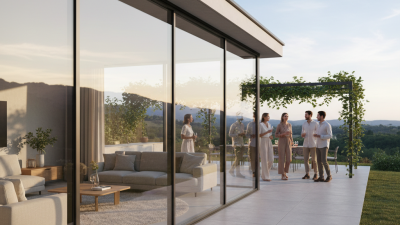
| Vinyl Sliding Door |
$1,500–$4,000 |
Clean frames and tracks twice a year. Inspect weatherstripping annually.
Lubricate rollers only with a product recommended by the manufacturer.
Replace worn rollers or seals when operation becomes difficult.
|
Usually 10–20 years for major frame components; insulating-glass and hardware coverage may be shorter.
|
20–30 years with proper installation and routine care. |
Commonly available with double-pane or triple-pane insulating glass.
Typical modern double-pane units may achieve U-factors of approximately 0.25–0.35, depending on glass and frame design.
|
Resists moisture, insects, and corrosion. Dark colors may experience greater thermal expansion.
Reinforced frames are preferable for large panels and high-wind locations.
|
★★★★☆
Strong value when low maintenance and moderate initial cost are priorities.
|
Budget-conscious replacements, rental properties, and moderate climates. |
| Thermally Broken Aluminum Sliding Door |
$2,000–$5,500 |
Clean tracks and drainage paths twice a year. Check fasteners, rollers, gaskets, and finish for wear.
Remove salt deposits more frequently in coastal areas.
|
Commonly 10–20 years for frames and finishes; glass seals, rollers, and hardware often have separate coverage periods.
|
25–40 years, depending on finish quality, hardware, exposure, and maintenance. |
Thermal breaks reduce heat transfer compared with non-thermally-broken aluminum.
High-performance models may achieve U-factors around 0.25–0.35 with suitable insulating glass.
|
Slim sightlines and strong frames support large glass areas. Powder-coated or anodized finishes resist corrosion,
but exposed coastal environments require regular cleaning and inspection.
|
★★★★☆
Good long-term value where durability, design flexibility, and large openings matter.
|
Modern homes, wide openings, high-use areas, and warmer climates. |
| Fiberglass Sliding Door |
$3,000–$7,000 |
Wash the exterior periodically and clean the track twice a year. Inspect seals and hardware annually.
Fiberglass generally does not require repainting when the factory finish remains intact.
|
Often 10–20 years for frame and finish components, with separate terms for glass, screens, and hardware.
|
30–50 years when protected from severe impact and installed correctly. |
Fiberglass frames have relatively low thermal expansion and can be paired with high-performance insulating glass.
Typical U-factors range from approximately 0.24–0.32 for efficient configurations.
|
Stable across temperature changes and resistant to moisture and rot. Higher-quality rollers and reinforced panels
improve performance for larger doors.
|
★★★★★
Excellent balance of durability, energy efficiency, appearance, and limited maintenance.
|
Cold climates, variable climates, and homeowners seeking long service life. |
| Wood or Wood-Clad Sliding Door |
$4,000–$10,000+ |
Inspect finish, joints, sealants, and exterior surfaces at least twice a year.
Recoat or refinish exposed wood as needed, commonly every 3–7 years depending on sun and moisture exposure.
|
Commonly 10–20 years for frame components; exterior finish, glass seals, and hardware may have different terms.
|
30–50+ years when protected, maintained, and kept properly sealed. |
Wood provides natural insulation, but performance depends heavily on frame construction, glass package,
air sealing, and installation quality. Efficient units may achieve U-factors around 0.25–0.35.
|
Offers a premium appearance and can be repaired or refinished. Vulnerable to moisture, swelling, rot,
and finish failure if drainage and maintenance are neglected.
|
★★★☆☆
High design value and repairability, but greater maintenance and purchase costs reduce financial value for some homes.
|
Traditional or high-end homes where appearance and material authenticity are important. |
| Impact-Rated Sliding Door |
$4,000–$12,000+ |
Clean tracks and inspect locking points, gaskets, rollers, and frame connections twice a year.
Confirm that impact-rated components remain correctly installed after storms or structural movement.
|
Frequently 10–20 years for major components, but warranty terms vary substantially by frame, glass, finish, and hardware.
|
25–40 years, depending on storm exposure, installation, and maintenance. |
Low-emissivity insulating glass is commonly available. Energy performance depends on the complete tested assembly;
impact resistance does not automatically mean the best thermal efficiency.
|
Designed for enhanced resistance to windborne debris and high-wind conditions when installed according to approved requirements.
Regional building-code approval should be verified before purchase.
|
★★★★☆
High value in designated wind and hurricane zones, but often unnecessary in protected locations.
|
Coastal and high-wind regions where local codes require enhanced protection. |
| Large-Panel Multi-Slide Door |
$8,000–$30,000+ |
Clean tracks monthly to quarterly depending on use. Inspect multiple rollers, locks, seals, and drainage channels
at least twice a year. Professional adjustment may be needed for heavy panels.
|
Commonly 10–20 years for frame systems, with shorter or separate coverage for moving hardware, screens, and finishes.
|
20–35 years with proper structural support, installation, and hardware maintenance. |
Performance varies widely because of large glass areas and multiple panel joints.
Specify low-emissivity glass, warm-edge spacers, and verified whole-unit air and water performance.
|
Provides wide clear openings but places greater demands on headers, floor levelness, drainage, and hardware.
Poor installation can cause binding, air leakage, and water intrusion.
|
★★★☆☆
Premium lifestyle value; financial value depends on correct design, structural preparation, and frequency of use.
|
Luxury renovations and indoor-outdoor living areas with engineered structural support. |
|
Cost and performance note:
Cost ranges are planning estimates in 2026 U.S. dollars for typical residential replacement projects.
They can vary by region, opening size, glass specification, structural modifications, permitting, trim work,
disposal, installation complexity, and local labor rates. A written quote should identify the complete door assembly,
installation scope, glass performance, hardware, screens, flashing, and warranty exclusions.
|
|
Selection guidance:
For energy comparisons, review the complete unit's certified U-factor, solar heat gain coefficient (SHGC),
air leakage, water penetration, and visible transmittance rather than comparing frame material alone.
Warranty length is only one measure of value; verify who performs service, whether labor is included,
and whether rollers, screens, glass seals, finishes, and installation are covered.
|