Choosing among China’s top long windows and doors manufacturers requires more than comparing catalog photos and factory prices. Global buyers need reliable evidence, practical experience, and clear technical communication. Long windows and doors can transform a façade, but their size creates demanding requirements for glass weight, frame strength, drainage, transport, and installation.
A 3.2-meter sliding door may look elegant in a showroom. It may perform differently on a windy coastal project. Experienced manufacturers should explain profile systems, glass specifications, hardware limits, thermal performance, and testing procedures. They should also provide accurate drawings, samples, factory images, and production updates. Small details matter. A few millimeters can affect alignment.
This guide introduces leading Chinese manufacturers serving international projects. It focuses on product quality, customization ability, engineering support, export experience, and after-sales reliability. Relevant certifications can support confidence, but buyers should verify documents and confirm whether they match the destination market. Claims should not replace inspection. A polished website is not proof of consistent production.
No supplier is perfect. Even capable factories may struggle with unusual dimensions, rushed schedules, or unclear installation conditions. That is where careful questions become valuable. Ask about wind-load calculations, packaging methods, replacement parts, warranty terms, and site support. Request references from comparable buildings, not only impressive projects.
The companies discussed here are assessed through practical purchasing considerations. These include material control, production equipment, quality inspection, communication speed, and delivery records. The goal is not to promote the cheapest option. It is to help architects, contractors, developers, and distributors identify partners that can meet demanding specifications with fewer surprises. Mistakes still happen. Good manufacturers respond openly and correct them.
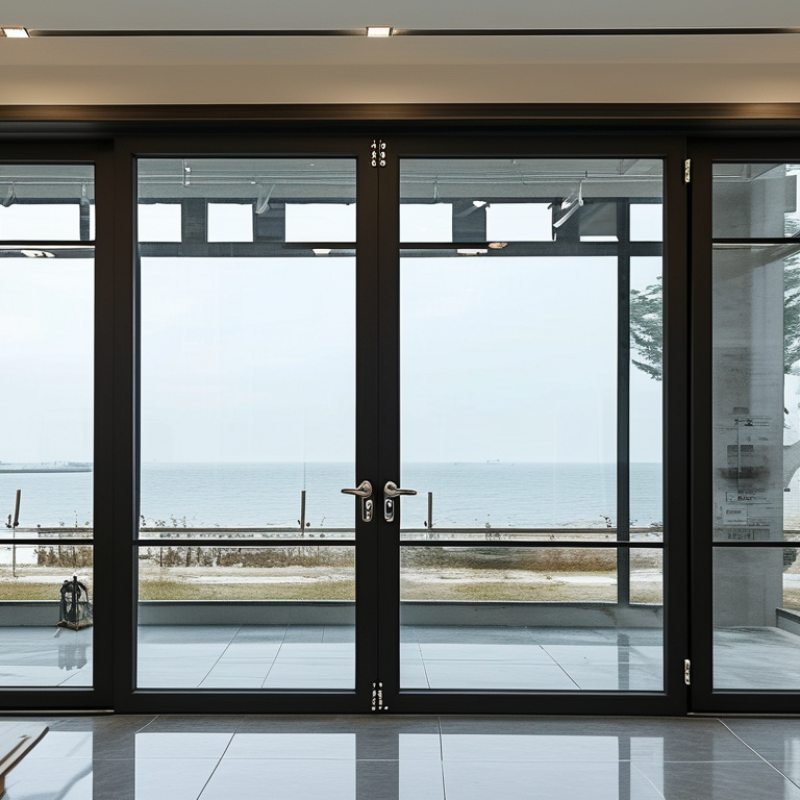
China has become a leading source of long windows and doors because its manufacturing network supports large, customized projects. Factories can produce extended frames for villas, hotels, offices, and modern retail spaces. Many suppliers offer aluminum, thermally broken systems, laminated glass, and various surface finishes. Buyers can also request different opening methods, hardware layouts, and drainage details.
The strongest advantage is production flexibility. Manufacturers often combine design support, machining, glass processing, assembly, and export packing in one supply chain. This can reduce coordination time and make project changes easier to manage. Experienced suppliers usually provide shop drawings, sample checks, performance data, and installation guidance. Still, quality is not automatic. Long profiles may twist during transport, and oversized glass needs careful handling. A lower price can hide weaker hardware or insufficient testing.
Tips: Request full-size samples when possible. Check wind-load, water-tightness, air-leakage, and thermal-performance reports. Confirm maximum panel sizes before approving the design. Ask how frames are reinforced and packed for overseas delivery. Keep every tolerance in writing. Some suppliers respond quickly, but their technical drawings may need closer review. A site measurement by a qualified professional remains valuable, especially for coastal buildings or high-rise projects.
Long windows and doors are changing how buildings connect with gardens, balconies, and public spaces. The main types include fixed panoramic windows, sliding doors, lift-and-slide systems, folding doors, and narrow-profile French doors.
Fixed glass suits living rooms and hotel lounges where daylight matters most. Sliding systems save floor space near furniture. Folding doors create wider openings for restaurants, villas, and showroom entrances.
The U.S. Department of Energy reports that windows can cause 25–30% of residential heating and cooling energy use. This makes glass selection critical, not decorative.
Low-emissivity glass, insulated frames, warm-edge spacers, and effective seals can reduce heat transfer. The International Energy Agency also reports that building operations use about 30% of global final energy.
Long windows therefore need climate-specific design. In hot regions, external shading may outperform darker glass. In cold areas, frame insulation deserves more attention. Bigger is not always better.
Tips:
Ask manufacturers for tested U-values, air-tightness results, water-resistance ratings, and wind-load data. Check opening size against hardware capacity. A heavy door can feel smooth in a factory, yet perform poorly after repeated site use. Request corner samples and installation details before ordering. Include drainage paths, threshold height, and replacement access. Some specifications look impressive, but real performance depends on installation quality.
China Top Long Windows and Doors Manufacturers for Global Buyers
Evaluating a Chinese manufacturer requires more than viewing a polished showroom. During factory audits, inspect aluminum extrusion, thermal-break assembly, corner welding, drainage holes, and glass handling. Ask for recent project samples, not only catalogue images. Large windows need stable profiles, accurate hardware, and controlled installation tolerances. Small gaps matter.
The IEA Buildings 2023 report states that buildings consume about 30% of global energy demand and create roughly 26% of energy-related emissions. Therefore, request tested U-values, air-tightness, water-tightness, wind-load, and acoustic results. Check the testing laboratory and report date. A lower U-value sounds attractive, but frame design, glass spacer quality, and installation can change real performance. This part is often underestimated.
The ISO Survey 2022 recorded more than 570,000 ISO 9001 certificates in China. Certification can indicate documented processes, but it does not guarantee consistent export quality. Review incoming-material records, production inspection points, batch numbering, and final-packing photographs. Ask how defects are handled after delivery. A serious supplier should provide drawings, hardware schedules, tolerances, maintenance guidance, and replacement procedures. Request a full-size mock-up before mass production. It costs more upfront. It can reveal movement, drainage, and handle-position problems early. Price comparisons remain useful, yet the cheapest quotation may exclude reinforcement, testing, packaging, or site support. I would also recheck every technical promise in writing; verbal confidence is not evidence.
| Evaluation Dimension | What Global Buyers Should Check | Reliable Capability Benchmark | Recommended Verification Evidence | Suggested Weight | Evaluation Score |
|---|---|---|---|---|---|
| Product Range | Availability of long-span sliding doors, lift-and-slide systems, folding doors, fixed glazing, casement windows, and thermally broken profiles. | A complete system portfolio covering project-specific opening sizes, glass options, hardware, screens, and accessory packages. | Technical catalogues, system drawings, tested configurations, sample room displays, and completed project references. | 10% | __/10 |
| Maximum Dimensions | Maximum sash width, sash height, panel weight, overall opening width, and allowable aspect ratio for long windows and doors. | Published limits supported by engineering calculations and hardware load data rather than marketing claims alone. | Approved shop drawings, structural calculations, hardware load ratings, and written confirmation of maximum tested dimensions. | 12% | __/12 |
| Structural Performance | Resistance to wind pressure, deflection control, mullion strength, frame reinforcement, and corner-joint stability. | Performance verified for the target project wind load and opening size; test results should identify the exact product configuration. | Laboratory reports for air pressure or structural performance, engineering calculations, profile reinforcement specifications, and project-specific design review. | 12% | __/12 |
| Air and Water Tightness | Air leakage, water penetration, drainage design, gasket continuity, sill detailing, and resistance to driving rain. | Test performance aligned with the destination market and the applicable product standard, such as EN 14351-1 or relevant ASTM/AAMA methods. | Independent test reports, test specimen drawings, drainage details, gasket specifications, and installation instructions. | 10% | __/10 |
| Thermal Performance | Frame material, thermal breaks, glazing type, spacer technology, U-value, solar heat gain, and condensation risk. | Project-specific U-value calculations based on the actual frame, glass, spacer, dimensions, and installation conditions. | NFRC- or ISO/EN-based calculations where applicable, glass configuration sheets, thermal simulation results, and condensation assessments. | 10% | __/10 |
| Glass and Hardware | Glass thickness, laminated or insulated glass options, safety glazing, rollers, locks, handles, seals, and replacement-part availability. | Components are compatible with the proposed sash weight and operating cycle, with traceable specifications and maintenance requirements. | Component datasheets, glass certificates, hardware load ratings, cycle-test records, spare-parts lists, and warranty terms. | 9% | __/9 |
| Testing and Compliance | Whether the exact product configuration has been tested for the destination market and intended application. | Valid third-party reports with product identification, test date, specimen size, test methods, and applicable acceptance criteria. | Reports from accredited laboratories, declarations of performance where applicable, CE-related technical documentation for relevant European products, and material declarations. | 12% | __/12 |
| Manufacturing Quality Control | Incoming material inspection, profile cutting, CNC processing, welding or crimping, assembly tolerances, glass installation, and final inspection. | Documented quality procedures with measurable inspection points and corrective-action records; ISO 9001 certification is useful but not a substitute for product inspection. | Quality manual, inspection checklists, calibration records, nonconformance reports, factory-audit results, and production photographs or videos. | 10% | __/10 |
| Customization and Engineering | Ability to adapt profiles, colors, glass, hardware, thresholds, insect screens, sill drainage, and interfaces with surrounding construction. | A dedicated technical team can produce coordinated shop drawings, sections, details, bills of materials, and revision-controlled approvals. | Sample shop-drawing package, engineering workflow, revision history, prototype process, and response times for technical queries. | 8% | __/8 |
| Production Capacity and Lead Time | Monthly capacity, project scheduling, raw-material planning, peak-season resilience, and ability to maintain consistent quality at higher volumes. | Lead times are stated by product type and quantity, with realistic milestones for drawing approval, sampling, production, inspection, and dispatch. | Production schedule, capacity statement, anonymized order-flow records, factory visit, and written delivery commitments. | 7% | __/7 |
| Packaging and Logistics | Protection against glass breakage, frame deformation, moisture, corrosion, and handling damage during international transport. | Export packaging is adapted to container loading, long-span components, local unloading equipment, and the selected Incoterm. | Packaging drawings, loading plans, container photos, packing lists, fumigation documents where required, and cargo-insurance arrangements. | 5% | __/5 |
| Installation Support | Clarity of installation instructions, tolerances, anchoring, waterproofing, sill preparation, adjustment, and on-site troubleshooting. | Installation details match the tested system and include interfaces with structure, membranes, sealants, insulation, and interior finishes. | Installation manuals, method statements, site-training records, remote support process, and examples of approved installation details. | 3% | __/3 |
| Commercial Reliability | Quotation accuracy, payment terms, warranty scope, after-sales response, spare parts, communication, and contract transparency. | The quotation clearly separates product, glass, hardware, packaging, freight, taxes, installation support, testing, and optional upgrades. | Itemized quotation, warranty document, service-level commitments, reference checks, dispute-resolution terms, and sample purchase contract. | 2% | __/2 |
Scoring method: rate each dimension from zero to the maximum points shown above. Prioritize independently verified performance reports, project-specific engineering, factory quality records, and installation capability over catalogue claims or low price alone.
For global buyers, long windows and doors must meet measurable quality standards, not only attractive showroom expectations. Experienced procurement teams check profile thickness, glass configuration, hardware strength, and surface finish before approving production. They also request air, water, wind-load, and thermal-performance test data for the target project. Samples can mislead. A small sample may hide drainage, sealing, or installation problems. Factory inspections should review welding, corner joints, coating consistency, and dimensional tolerances. Clear inspection records make quality decisions more reliable.
Customization becomes practical when technical details are shared early. Buyers should provide opening sizes, wall conditions, glass requirements, color references, and local climate information. Manufacturers with strong engineering support can prepare shop drawings, calculate weight, and recommend suitable hardware. However, excessive customization may increase lead times or create replacement difficulties. That trade-off deserves honest discussion. Details matter. For export orders, dependable support includes protective packaging, loading photos, product labels, installation guidance, and accurate commercial documents. The supplier should confirm production schedules, container capacity, spare parts, and communication procedures before receiving the order. Export experience is useful, but it does not replace project-specific checking. Small errors in measurements or documentation can delay installation and increase costs. Buyers should approve drawings carefully and keep written records of every revision.
European standard EN 14351-1 uses different classification scales to evaluate window and external pedestrian door performance. Air permeability is classified from 1 to 4, watertightness from 1A to 9A, and resistance to wind load from 1 to 5. Higher classifications generally indicate stronger tested performance, but the scales should not be compared directly because each measures a different technical property. Global buyers should request verified test reports, product specifications, customization details, and export documentation from suppliers.
Choosing a Chinese long-window and door supplier starts with the project, not the catalog. Define opening sizes, climate exposure, glass requirements, thermal targets, and installation conditions. Ask for drawings before discussing volume. A serious manufacturer should question unclear dimensions. That response reveals engineering discipline. Request factory registration details, production photos, test reports, and references from comparable export projects. Verify documents with the issuing laboratory or certification body when possible. Do not accept screenshots alone. Small detail, big signal.
Compare samples under real conditions. Check corner joints, drainage paths, gasket fit, handle movement, coating consistency, and frame distortion. Operate each panel repeatedly. Test locking without forcing it. Ask how the supplier controls aluminum thickness, glass quality, and hardware batches. Independent inspections before shipment can confirm packing, dimensions, and surface defects. I have seen attractive samples fail because production used different accessories. A written sample approval process reduces this risk, although it cannot replace inspection.
Evaluate commercial reliability beside technical quality. Confirm lead times, minimum quantities, packaging design, spare parts, warranty scope, and after-sales response times. Ask who handles design changes and delayed shipments. Use a clear purchase specification with revision numbers. Keep communication records. Visit the factory for significant orders, or arrange a live video audit with production staff. Suppliers answering only through salespeople may need closer review. Price matters, but poor drainage becomes expensive on site. Reconsider your scoring after every sample, because early confidence can be misleading.
Thank you!
We will be posting information soon