China Top 10 High Rise Curtain Walling Suppliers
China’s high-rise construction market has become a major testing ground for advanced façade engineering. curtain walling for high rise buildings must resist wind pressure, rain penetration, thermal movement, and long-term material fatigue. These demands become sharper as towers grow taller and more complex.
The Council on Tall Buildings and Urban Habitat reports continued global growth in buildings above 200 metres, although construction activity varies by region. Its tall-building data highlights the importance of structural coordination, façade access, and verified performance. The 2024 UNEP Global Status Report for Buildings and Construction also states that buildings consume about 32% of global energy and produce approximately 34% of global carbon emissions. This makes thermal efficiency more than a marketing claim. It affects operational cost and environmental performance.
This guide reviews ten leading Chinese suppliers through practical criteria. These include engineering experience, system design, production capacity, testing records, project references, and after-sales support. Standards such as EN 13830, ASTM E330, and relevant Chinese building codes provide useful benchmarks for air leakage, water resistance, and wind-load performance. Factory details matter too: CNC machining, insulated glazing lines, sealant control, and traceable inspection records can reveal a supplier’s real capability.
No ranking is perfect. Company data changes. Public project information can also be incomplete. Therefore, buyers should request current certificates, laboratory reports, sample specifications, and site references before making a final decision. A polished brochure is not enough. The best supplier should combine dependable manufacturing with careful project communication, because even a small façade error can become highly visible on a forty-storey tower.
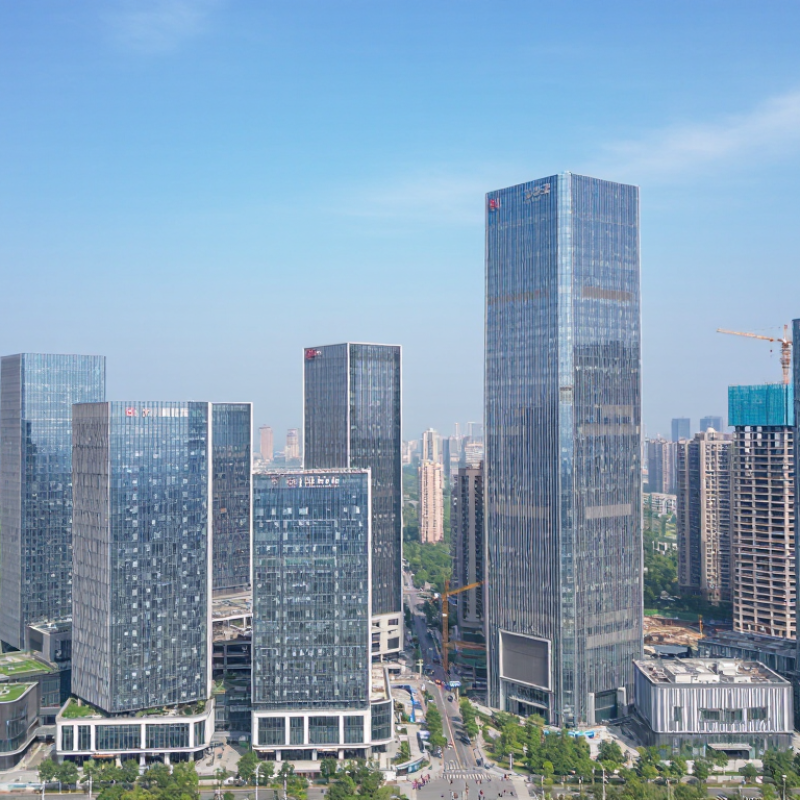
China’s High-Rise Curtain Walling Industry Overview
China Top 10 High Rise Curtain Walling Suppliers
China’s high-rise curtain walling industry has developed around dense urban construction and demanding performance standards. The top ten suppliers are usually assessed through design capability, fabrication capacity, testing records, and installation support. Their projects commonly use unitized curtain walls for faster installation on tall buildings. Stick systems remain practical for smaller towers and complex renovations.
Reliable suppliers study local wind loads, seismic movement, thermal expansion, and water drainage before production. They coordinate aluminum profiles, glass, insulation, anchors, and fire-stopping materials as one system. Factory inspections should include dimensional checks, coating quality, sealant adhesion, and panel assembly accuracy. Testing may cover air leakage, water penetration, structural pressure, and thermal performance. Details matter.
Experience on site still separates capable suppliers from attractive proposals. A supplier may provide excellent drawings but struggle with crowded floors, lifting restrictions, or late interface changes. That weakness deserves attention. Buyers should review similar building heights, laboratory reports, method statements, and after-sales response times. Clear responsibility for design changes reduces disputes. Digital coordination, mock-up testing, and traceable quality records also improve reliability. However, no ranking is perfect; project conditions can change the final choice.
China Top 10 High Rise Curtain Walling Suppliers - China’s High-Rise Curtain Walling Industry Overview
| No. | Industry Dimension | Verified Chinese Standard or Reference | Relevant Technical Scope | Supplier Evaluation Focus |
|---|---|---|---|---|
| 1 | Curtain Wall Product Classification | GB/T 21086-2007, Building Curtain Walls | Defines the principal technical performance categories for building curtain wall systems, including air permeability, water tightness, wind-load resistance and thermal performance. | Ability to provide system calculations, tested configurations, fabrication drawings and project-specific performance documentation. |
| 2 | Fire Protection Compliance | GB 55037-2022, General Code for Building Fire Protection and Prevention | Mandatory fire-safety requirements applicable to building design, construction, fire separation and fire-resisting interfaces. | Use of approved fire-stop assemblies, tested spandrel details, fire-resistant insulation and documented installation procedures. |
| 3 | Wind-Load Design | GB 50009-2012, Load Code for the Design of Building Structures | Provides the basis for determining wind actions and other design loads affecting high-rise façade panels, anchors, mullions and connections. | Project-specific wind calculations, structural modelling, corner-zone assessment and traceable connection design. |
| 4 | Seismic Performance | GB 50011-2010, Code for Seismic Design of Buildings | Establishes seismic design principles for building structures and components in different seismic intensity regions. | Movement allowance at brackets and joints, inter-story drift accommodation, anchor design and seismic testing where required. |
| 5 | Air Permeability and Water Tightness | GB/T 15227-2019, Test Method of Air Permeability, Watertightness, Wind Load Resistance Performance for Building Curtain Walls | Covers laboratory and performance testing procedures for air infiltration, water penetration and wind-load resistance. | Availability of full-scale mock-up testing, drainage design, pressure-equalized cavities and quality records for seals and gaskets. |
| 6 | Energy and Thermal Performance | GB 50189-2015, Design Standard for Energy Efficiency of Public Buildings | Addresses energy-efficiency design for public buildings, including envelope heat transfer, solar gains and glazing performance. | Thermal-bridge control, insulated framing, low-emissivity glazing options, condensation analysis and project energy calculations. |
| 7 | Safety Glazing | GB 15763.2-2005, Safety Glazing Part 2: Tempered Glass | Specifies requirements and test methods for tempered safety glass used in architectural applications. | Glass heat-soak requirements where specified, dimensional control, edge quality, breakage pattern and traceable inspection reports. |
| 8 | Insulating Glass Units | GB/T 11944-2012, Insulating Glass | Covers performance and testing requirements for insulating glass units used to improve thermal and acoustic properties. | Spacer selection, seal durability, gas filling control, cavity cleanliness, moisture resistance and production traceability. |
| 9 | Structural Silicone Glazing | GB 16776-2005, Structural Silicone Sealants for Building | Sets requirements for structural silicone sealants used in bonding and glazing applications in building envelopes. | Compatibility testing, adhesion testing, batch control, controlled factory application and documented curing conditions. |
| 10 | System Type and Installation Capability | Common high-rise delivery formats: unitized and stick-built curtain wall systems | Unitized systems are factory-assembled into panels; stick-built systems are assembled mainly on site. Selection depends on building geometry, programme, access and quality-control requirements. | Factory capacity, mock-up management, panel logistics, tolerance control, site supervision, installation safety and after-sales support. |
Note: Final curtain wall performance values, material specifications and testing requirements must be confirmed against the approved project drawings, local regulations, climatic conditions and the latest applicable editions of the relevant standards.